Camponotus fellah
(Camponotus fellah)
Description
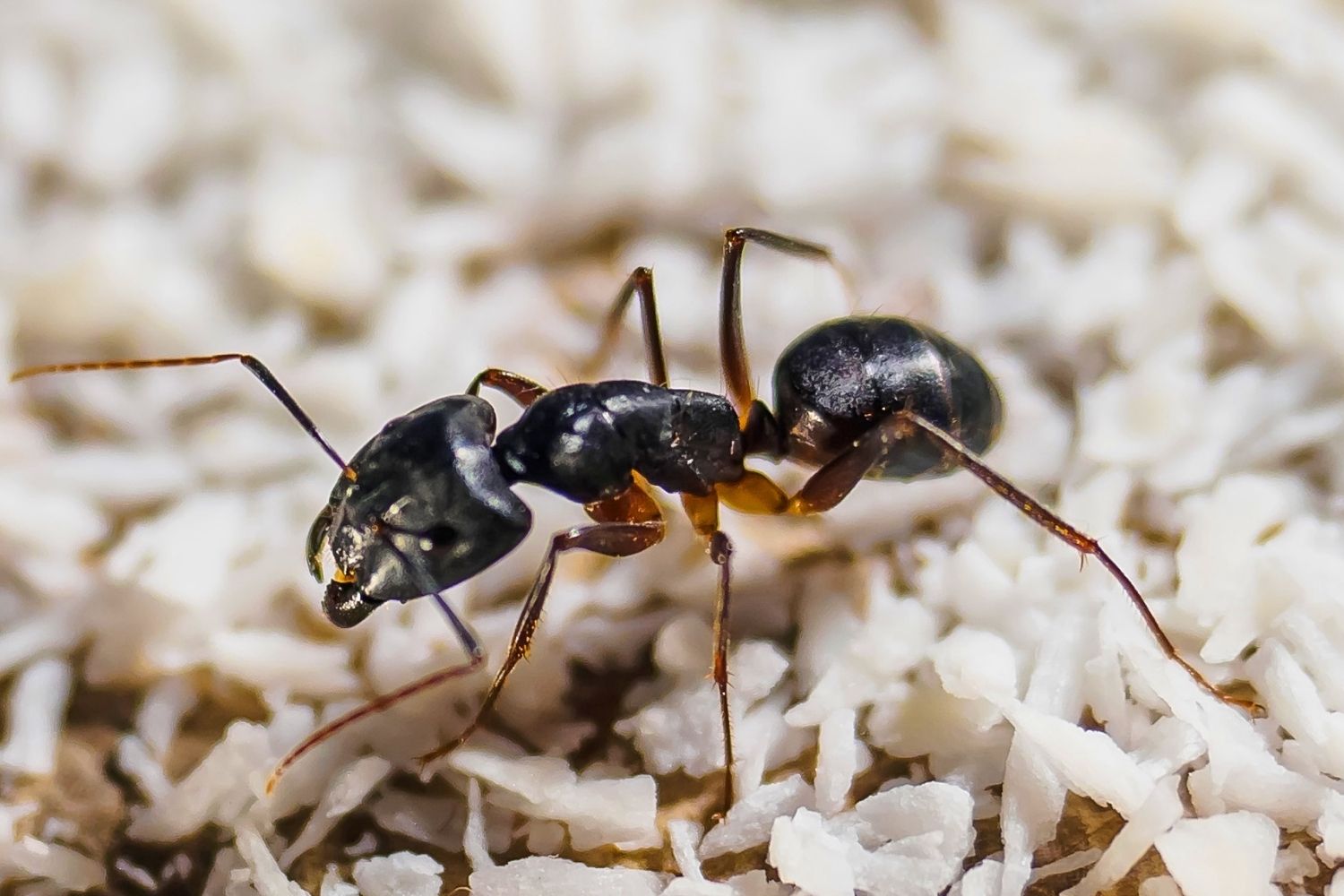
Camponotus fellah is a species of ant in the subfamily Formicinae found across the Middle East and North Africa. This species was formally described by Dalla Torre in 1893. A C. fellah queen holds the record for Israeli ant longevity, surviving for 26 years (1983-2009) in a laboratory environment. Camponotus fellah is monogynous (i.e., colonies consist of a single queen), with polymorphic workers. Queens are singly inseminated meaning that all workers in a colony are full sisters. Colonies are generally found in dry and warm habitats including coastal dunes and deserts. Ant nest-mate recognition is mediated by low volatile cuticular hydrocarbons. Isolated workers are unable to frequently exchange hydrocarbons with nest-mates, and their hydrocarbon profiles diverge from that of the colony. After 20–40 days in isolation, the hydrocarbon profiles of workers diverges to such an extent that they are no longer accepted by the colony. However, aggression is reduced if the isolated workers are exposed to airflow from the colony, indicating that volatile nest chemicals also contribute to nest-mate recognition. Trophallaxis - the mouth-to-mouth transfer of liquid food - is a main mechanism of food dissemination in ant colonies. In C. fellah, the colony trophallactic network has been quantified by combining unique marking of individuals with fluorescently labelled food. This procedure refined our understanding of trophallaxis, revealing that transfer flow can switch direction during a trophallaxis event, that foragers receive (as well as unload) food, that foragers often leave the nest after offloading only a small amount of the food in their crop, and that non-foragers also offload considerable amounts of food. Further, the vast majority of trophallaxis events were short in duration, possibly functioning to maintain the colony odour rather than disseminate food. Indeed, when the hydrocarbon profiles of members of C. fellah colonies are artificially modified, the colony reaches homogeneity more rapidly than non-trophallaxing species. Through maintaining homogenous hydrocarbon profiles, trophallaxis mediates colony cohesion. The engagement of workers in socially cohesive trophallaxis may be underpinned by levels of octopamine in the brain. Usually after isolation, upon return to the colony, workers perform trophallaxis at an elevated rate. However, if workers are treated with octopamine, this increase in trophallaxis is not observed.
Taxonomic tree: