American robin
(Turdus migratorius)
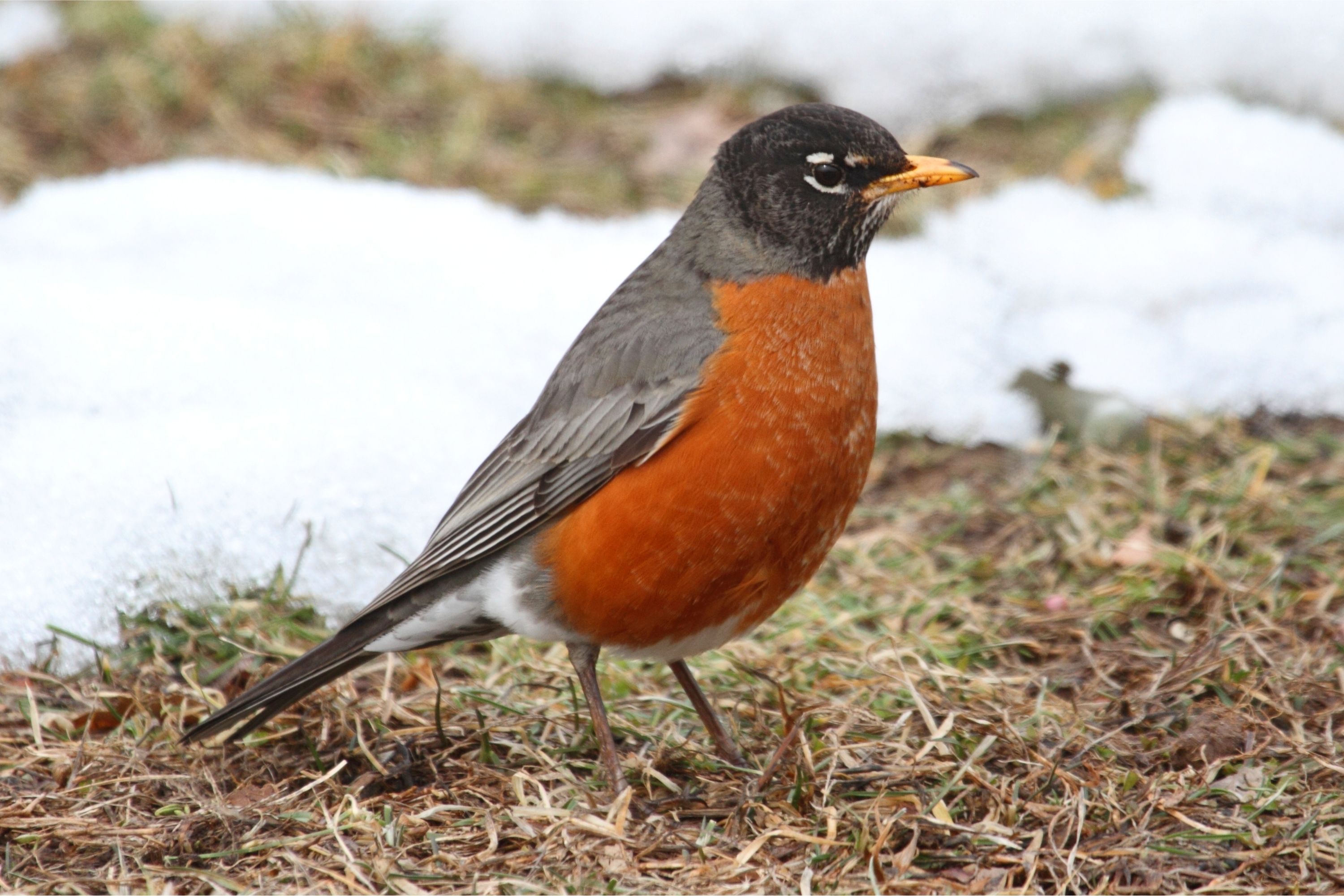
Description
Turdus migratorius, commonly known as the American Robin, is a medium-sized bird that belongs to the thrush family. They are found throughout North America, from the Arctic Circle to Mexico, and are one of the most recognizable and beloved birds in the region. In this article, we will delve deeper into the characteristics, behavior, habitat, and conservation status of the American Robin. Physical Characteristics Turdus migratorius is a medium-sized bird that measures around 9-11 inches in length and weighs around 72-95 grams. The males are slightly larger than females, with a wingspan of around 12-16 inches. They have a distinctive bright orange-red breast, with a dark head, back, and tail. Their belly and undertail coverts are white, and their wings are dark brown with white patches. Juveniles have a mottled brown and white plumage that gradually changes into adult plumage after their first year. Habitat and Range The American Robin is found throughout North America, from the Arctic Circle to Mexico. They are a common and widespread species that can be found in a variety of habitats, including woodlands, forests, parks, gardens, and suburban areas. They prefer habitats with a mix of open spaces and trees, which provide ample feeding and nesting opportunities. During the breeding season, they are found in more wooded areas where they can build their nests and raise their young. During the non-breeding season, they may move to more open areas, such as fields and meadows, to feed on fruits and berries. In the winter, some American Robins migrate to southern regions of North America, including Mexico and Central America, to take advantage of more abundant food resources. However, many American Robins are year-round residents and can be found in their breeding territories throughout the year. Behavior The American Robin (Turdus migratorius) is a diurnal bird, which means they are most active during the day. They are generally solitary birds but may form small flocks during the non-breeding season. They are territorial birds and defend their breeding territories fiercely from other robins and birds. The American Robin is an omnivorous bird and feeds on a variety of food items, including insects, earthworms, fruits, and berries. They are particularly fond of earthworms and are known to pull them out of the ground with their beaks. During the winter months, they switch to a mostly fruit-based diet. The breeding season of the American Robin starts in early spring and lasts until mid-summer. They form monogamous pairs and build their nests in trees, shrubs, and other elevated locations. The female builds the nest using twigs, grasses, and mud, and lines it with fine grasses, hair, and feathers. The female lays 3-5 blue-green eggs, which hatch after around 12-14 days. The chicks are born naked and blind and are fed by both parents. The chicks fledge after around 14-16 days, and the parents continue to care for them for another two weeks. Diet Turdus migratorius is an omnivorous bird and feeds on a variety of food items, including insects, earthworms, fruits, and berries. They are particularly fond of earthworms and are known to pull them out of the ground with their beaks. They also feed on beetles, caterpillars, grubs, and other insects. During the breeding season, American Robins feed on a variety of fruits and berries, including strawberries, blueberries, and cherries. They are important seed dispersers and help to spread seeds of these fruits and berries throughout their range. During the winter months, American Robins switch to a mostly fruit-based diet. They feed on a variety of fruits, including crabapples, holly berries, and sumac berries. They may also feed on other available food items, such as suet and birdseed, from bird feeders. Conservation Status The American Robin is not considered a threatened species and has a conservation status of Least Concern according to the International Union for Conservation of Nature (IUCN). However, they face a variety of threats, including habitat loss, pesticide use, and collisions with buildings and vehicles. They are also vulnerable to the effects of climate change, which can alter their breeding and migration patterns. Conservation efforts, such as habitat protection and reducing pesticide use, can help to ensure the survival of American Robin populations. Additionally, monitoring their populations and studying their behavior and ecology can help to identify potential threats and conservation strategies to mitigate them. Conclusion The American Robin (Turdus migratorius) is a beloved and iconic bird in North America. They are known for their distinctive plumage and cheerful song and are a familiar sight in parks, gardens, and suburban areas. They are versatile birds that can adapt to a variety of habitats and are important pollinators and seed dispersers. While they are not currently threatened, it is important to continue monitoring their populations and taking steps to protect their habitats and reduce threats to their survival.
Taxonomic tree: