Banded sugar ant
(Camponotus consobrinus)
Description
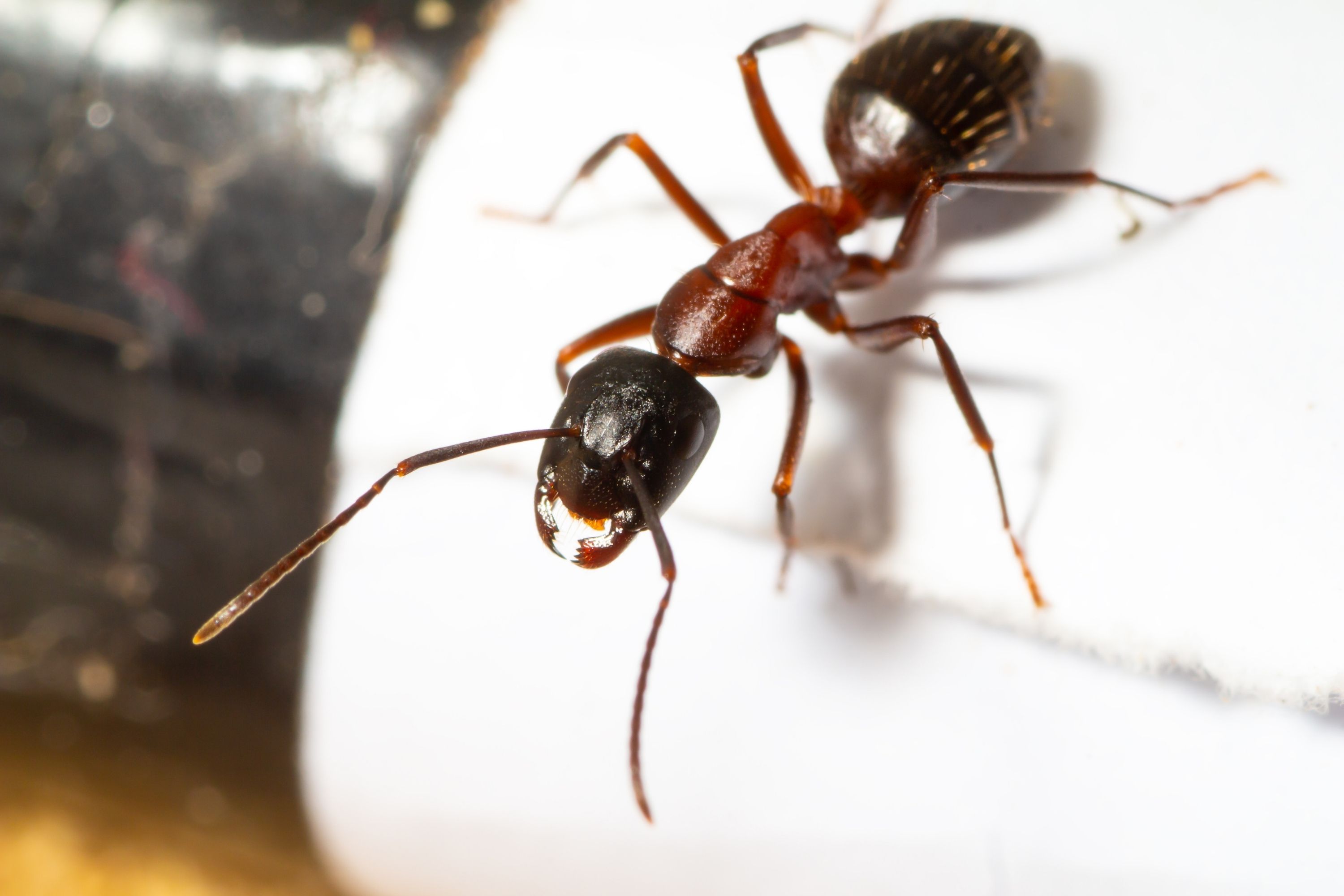
The banded sugar ant (Camponotus consobrinus), also known as the sugar ant, is a species of ant native to Australia. A member of the genus Camponotus in the subfamily Formicinae, it was described by German entomologist Wilhelm Ferdinand Erichson in 1842. Its common name refers to the ant's liking for sugar and sweet food, as well as the distinctive orange-brown band that wraps around its gaster. The ant is polymorphic and relatively large, with two different castes of workers: major workers (also known as soldiers), and minor workers. These two group of workers measure around 5 to 15 millimetres (0.2 to 0.6 in) in length, while the queen ants are even larger. Mainly nocturnal, banded sugar ants prefer a mesic habitat, and are commonly found in forests and woodlands. They also occur in urban areas, where they are considered a household pest. The ant's diet includes sweet secretions that are retrieved from aphids and other insects that it tends. This species is a competitor of the meat ant (Iridomyrmex purpureus), and food robbery and nest-plugging is known to occur between these two ants. Workers prey on insects, killing them with a spray of formic acid. Banded sugar ants are preyed upon by other ants, echidnas, and birds. The eggs of this species were consumed by Indigenous Australians. Banded sugar ants appear in different forms, varying from 4 to 16 millimetres (0.2 to 0.6 in) in length, making them a large species. Banded sugar ants are polymorphic, and colonies have two types of workers: minor workers and major workers that have different size ranges. The two castes can be identified easily, due to the workers being smaller and more slender, while the soldiers are larger and more robust. Both castes carry a set of powerful mandibles. Queen ants are the largest ants in the colony. Banded sugar ants come in a large variety of colours, possibly due to ecological rather than genetic influences. For example, humidity, insolation and temperature may all affect the colour of an individual. Female banded sugar ants are easily recognised by their black head, orange thorax and the orange-brown band that wraps around their gaster. Males of the species are completely black. The dark sides of the thorax and legs are ferruginous (rusty in colour). The scape (the base of the antenna) and mandibles are black, and the head is wider than the thorax.
Taxonomic tree: