Jacaranda ulei
(Jacaranda ulei)
Description
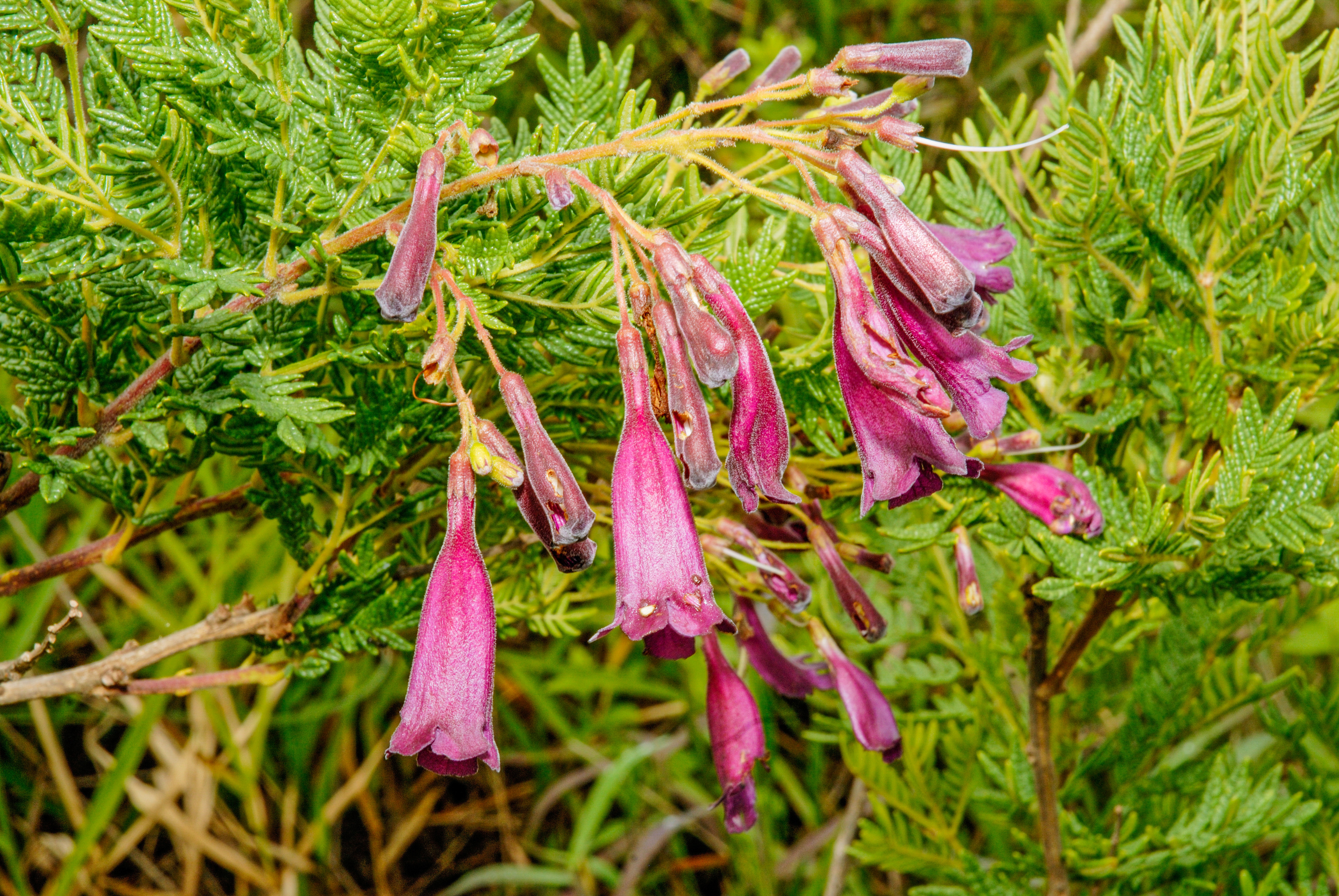
Jacaranda ulei is a flowering tree native to the Cerrado region of Brazil.It was first described by Édouard Bureau and Karl Moritz Schumann in 1897. Jacaranda ulei is a small tree, growing to between 0.6 metres (2 ft 0 in) and 1.5 metres (4 ft 11 in) tall. The leaves are 6 to 10 cm in length and bipinnate, having between 8 and 12 pinnae and 6 to 16 leaflets. Leaflets are 15 to 20 cm long, 3 to 5 cm wide and "narrowly oblong" in shape. The flowers are deep purple in colour and arranged in a branched, Panicle form. They are 5 to 10mm long and 4 to 7mm wide with 5 shallow dentate. The fruit is woody and "round to elliptic" in shape, growing 3.5 to 5.5 cm long and 3 to 4 cm wide. The species is a resprouter, with its root system allowing it to survive wild fires and droughts seen in the savanna ecosystem of the Cerrado region of Brazil. The roots of the plant have been used as a traditional folk remedy to treat urinary tract infections, amoebiasis, backache, rheumatism and skin disorders. Jacaranda is a genus of 49 species of flowering plants in the family Bignoniaceae, native to tropical and subtropical regions of the Americas. A cosmopolitan plant, Jacaranda mimosifolia is quite common in Paraguay, Uruguay, Southern California, Florida, Mexico, Colombia, Saudi Arabia, Argentina, Brazil, South Africa, Botswana, Zimbabwe, Australia, New Zealand, Israel, Italy, Portugal, Spain (particularly in Málaga) and Zambia and has been introduced to most tropical and subtropical regions to the extent that it has entered popular culture. The species are shrubs to large trees ranging in size from 20 to 30 m (66 to 98 ft) tall. The leaves are bipinnate in most species, pinnate or simple in a few species. The flowers are produced in conspicuous large panicles, each flower with a five-lobed blue to purple-blue corolla; a few species have white flowers. The fruit is an oblong to oval flattened capsule containing numerous slender seeds. The genus differs from other genera in the Bignoniaceae in having a staminode that is longer than the stamens, tricolpate pollen, and a chromosome number of 18. The name is of South American (more specifically Tupi-Guarani) origin, meaning fragrant.The word jacaranda was described in A supplement to Mr. Chambers's Cyclopædia, 1st ed., (1753) as "a name given by some authors to the tree the wood of which is the log-wood, used in dyeing and in medicine" and as being of Tupi-Guarani origin, by way of Portuguese.
Taxonomic tree: