Old Man of the Andes
(Eriosyce senilis)
Description
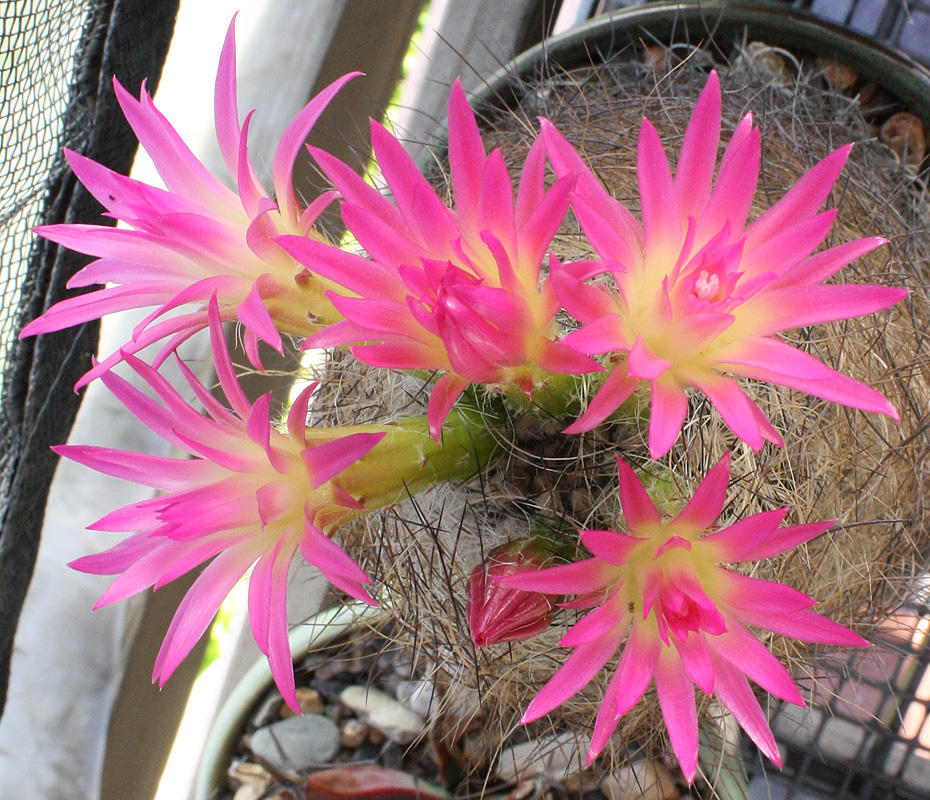
Eriosyce senilis is a cactus species that is native to the Andes Mountains of Argentina and Chile. It is also known as the "Old Man of the Andes" due to its unique appearance. This plant is highly valued among cacti collectors due to its stunning white hairs and beautiful flowers. In this article, we will explore the characteristics, habitat, care, and cultivation of Eriosyce senilis. Classification Eriosyce senilis belongs to the family Cactaceae, which includes more than 200 genera and 1,800 species. This plant belongs to the subfamily Cactoideae, tribe Notocacteae, and genus Eriosyce. Description Eriosyce senilis is a small, slow-growing cactus that reaches a height of about 8 cm (3.1 inches) and a diameter of 12 cm (4.7 inches). The plant has a globular or cylindrical shape, with a thick, fleshy stem covered with woolly, white hairs that protect it from the sun's intense heat. The spines are arranged in clusters of up to 20, and they are yellowish-brown, about 1 cm (0.39 inches) long, and slightly curved. The flowers of Eriosyce senilis are large and showy, measuring up to 6 cm (2.4 inches) in diameter. They appear in spring and summer, usually in shades of pink or purple. The fruit is small, greenish, and fleshy, containing many black seeds. Habitat and Range The Eriosyce senilis is native to the Andes Mountains of Argentina and Chile, where it grows at an altitude of 2,500 to 4,000 meters (8,200 to 13,100 feet). It thrives in the rocky, well-draining soils of the high-altitude deserts, where it experiences hot, dry summers and cold, snowy winters. The plant is adapted to the harsh conditions of its habitat, where it receives intense sunlight and low rainfall. Its range is limited to this specific region of South America and it is not found in any other parts of the world. Cultivation Eriosyce senilis is a relatively easy cactus to cultivate, making it a popular choice among collectors. Here are some tips for its cultivation: Soil: Use a well-draining soil mix that is specifically designed for cacti and succulents. This will help prevent the roots from becoming waterlogged and rotting. Pot: Choose a pot with drainage holes that is just slightly larger than the plant's root ball. This will help prevent overwatering and allow the soil to dry out quickly. Light: Eriosyce senilis prefers bright, direct sunlight, but can tolerate some shade. Place the plant in a sunny location, such as a south-facing window, and protect it from intense midday sun in the summer. Water: In the summer, water Eriosyce senilis sparingly once a week, allowing the soil to dry out completely between waterings. In the winter, the plant should be kept dry, with watering only when the soil is completely dry. Fertilizer: During the growing season, Eriosyce senilis can be fertilized once a month with a cactus-specific fertilizer. Follow the instructions on the label and dilute the fertilizer to half strength. Propagation: Eriosyce senilis can be propagated from seed or by offsets that grow at the base of the plant. The seeds should be sown in a well-draining soil mix and kept moist until germination occurs, usually within 1-3 weeks. The offsets can be gently removed from the parent plant and planted in a pot with well-draining soil. By following these tips, you can ensure that your Eriosyce senilis stays healthy and thrives in your care. Propagation Eriosyce senilis can be propagated by seed or by offsets. Propagation by Seed: Collect ripe seeds from a mature Eriosyce senilis plant. Plant the seeds in a well-draining soil mix that is specifically designed for cacti and succulents. Water the soil to moisten it, but be careful not to overwater. Cover the pot with plastic wrap or a plastic dome to create a humid environment. Place the pot in a warm, bright location that receives indirect sunlight. Keep the soil moist but not wet, and mist the seeds occasionally. Germination usually occurs within 1-3 weeks. Once the seedlings have several true leaves, they can be transplanted into individual pots. Propagation by Offsets: Wait until the Eriosyce senilis plant produces offsets, which usually grow at the base of the plant. Gently remove the offsets from the parent plant with a sharp, sterile knife. Allow the wounds to dry for a few days before planting the offsets in a well-draining soil mix that is specifically designed for cacti and succulents. Water the soil to moisten it, but be careful not to overwater. Place the pot in a warm, bright location that receives indirect sunlight. Allow the soil to dry out between waterings. The offsets will begin to grow roots and new growth within a few weeks. Propagation of Eriosyce senilis is relatively easy, and can be done successfully with proper care and attention. Uses Eriosyce senilis is primarily used as an ornamental plant and is highly valued among cactus collectors for its unique appearance and beautiful flowers. Its woolly, white hairs and spines make it a striking addition to any cactus collection. In its native range, the plant is also used by indigenous peoples for medicinal purposes. However, these uses have not been scientifically studied or validated. It is important to note that Eriosyce senilis is not consumed by humans or animals and is not used for any commercial or industrial purposes. Conservation Status The conservation status of Eriosyce senilis is currently listed as "Endangered" by the International Union for Conservation of Nature (IUCN). This is due to a number of threats to the species, including habitat loss, collection for the horticultural trade, and climate change. Eriosyce senilis is a slow-growing plant that is vulnerable to over-collection, making it particularly susceptible to population decline. In addition, its high-altitude habitat is at risk due to climate change, which could further threaten the species. Efforts are underway to conserve and protect Eriosyce senilis, including the establishment of protected areas and the promotion of sustainable collection practices. It is important to take measures to ensure the survival of this unique and valuable species. Conclusion Eriosyce senilis is a unique and stunning cactus species that is highly valued among collectors. Its white, woolly hairs and showy flowers make it an attractive addition to any cactus collection. With its easy care requirements, it is an ideal plant for beginners and experienced cacti growers alike. Proper care and cultivation can ensure the plant's health and longevity, allowing it to thrive for many years to come.
Taxonomic tree: