Hydrangea davidii
(Hydrangea davidii)
Description
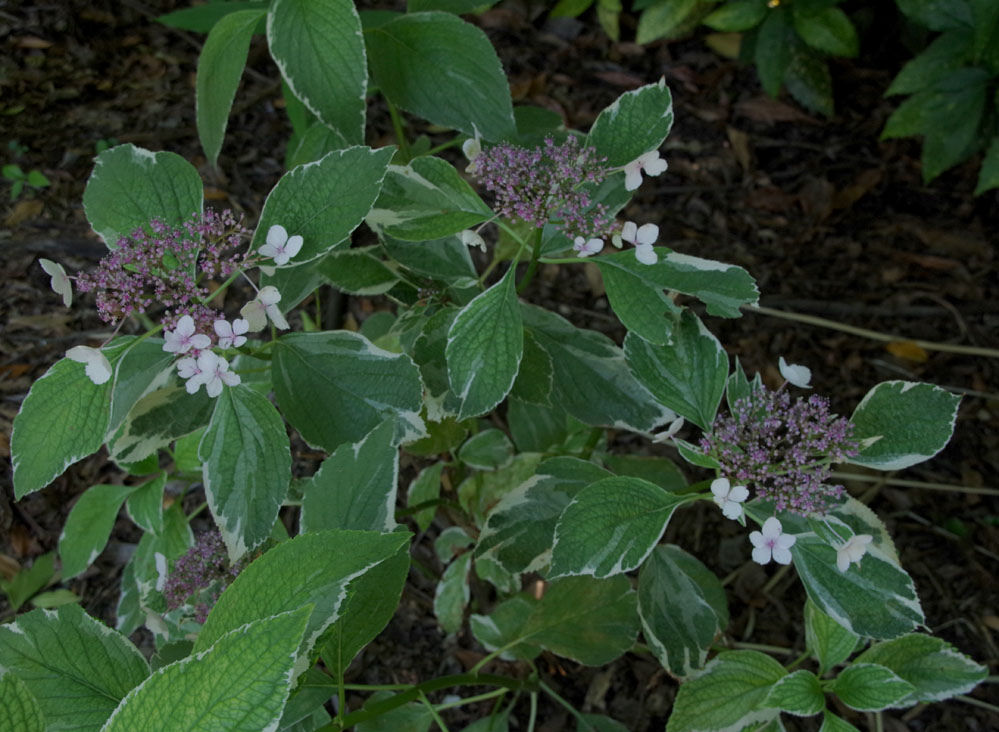
Hydrangea davidii, also known as David's hydrangea, is a deciduous shrub native to China. It belongs to the Hydrangeaceae family and is one of the more rare and exotic members of the Hydrangea genus. In this article, we will explore the characteristics, growing conditions, and care of Hydrangea davidii. Characteristics Hydrangea davidii is a medium-sized shrub that can grow up to 1.5 to 2 meters tall and 1.5 to 2.5 meters wide. The leaves are ovate, dark green, and about 5 to 10 cm long. The flowers are small, fragrant, and grow in large, cone-shaped clusters that can be up to 15 cm long and 10 cm wide. The flowers themselves are small, with a diameter of only 1 cm, and have a unique blue-violet color. The flowers are produced on the previous year's growth in mid to late summer and can persist into early autumn. The fruit is a small capsule containing many seeds. Growing Conditions Hydrangea davidii prefers a well-drained soil that is rich in organic matter. It is best grown in partial shade to full sun, although it may require some protection from the intense afternoon sun in hot summer climates. It is hardy in USDA zones 6 to 9, which means it can tolerate temperatures as low as -23°C (-10°F) to -1°C (30°F). Hydrangea davidii is relatively easy to grow and maintain, making it a popular choice for gardeners. It is best propagated by softwood cuttings in the summer or by layering in the autumn. Care Hydrangea davidii requires regular watering during the growing season, especially during dry periods. It is also important to mulch around the base of the plant to retain moisture in the soil. Fertilizer can be applied in the spring to promote growth and flowering, and pruning can be done after flowering to maintain a tidy shape and encourage new growth. Deadheading can also be done to remove spent flowers and promote a more prolonged bloom. One of the most unique characteristics of Hydrangea davidii is its blue-violet flowers. This color is not common in hydrangeas and is a result of the plant's ability to produce aluminum ions in its soil. The availability of aluminum ions in the soil determines the color of the flowers, with acidic soil producing blue flowers and alkaline soil producing pink flowers. Hydrangea davidii has a preference for acidic soil, which explains its blue-violet flowers. Conclusion Hydrangea davidii is an attractive and unusual plant that can add a touch of the exotic to any garden. Its blue-violet flowers and easy-to-grow nature make it a popular choice for gardeners, and its ability to thrive in a variety of growing conditions makes it a versatile plant. With proper care, this unique shrub can be a beautiful addition to any landscape.
Taxonomic tree: