St. John's Wort
(Hypericum perforatum)
Description
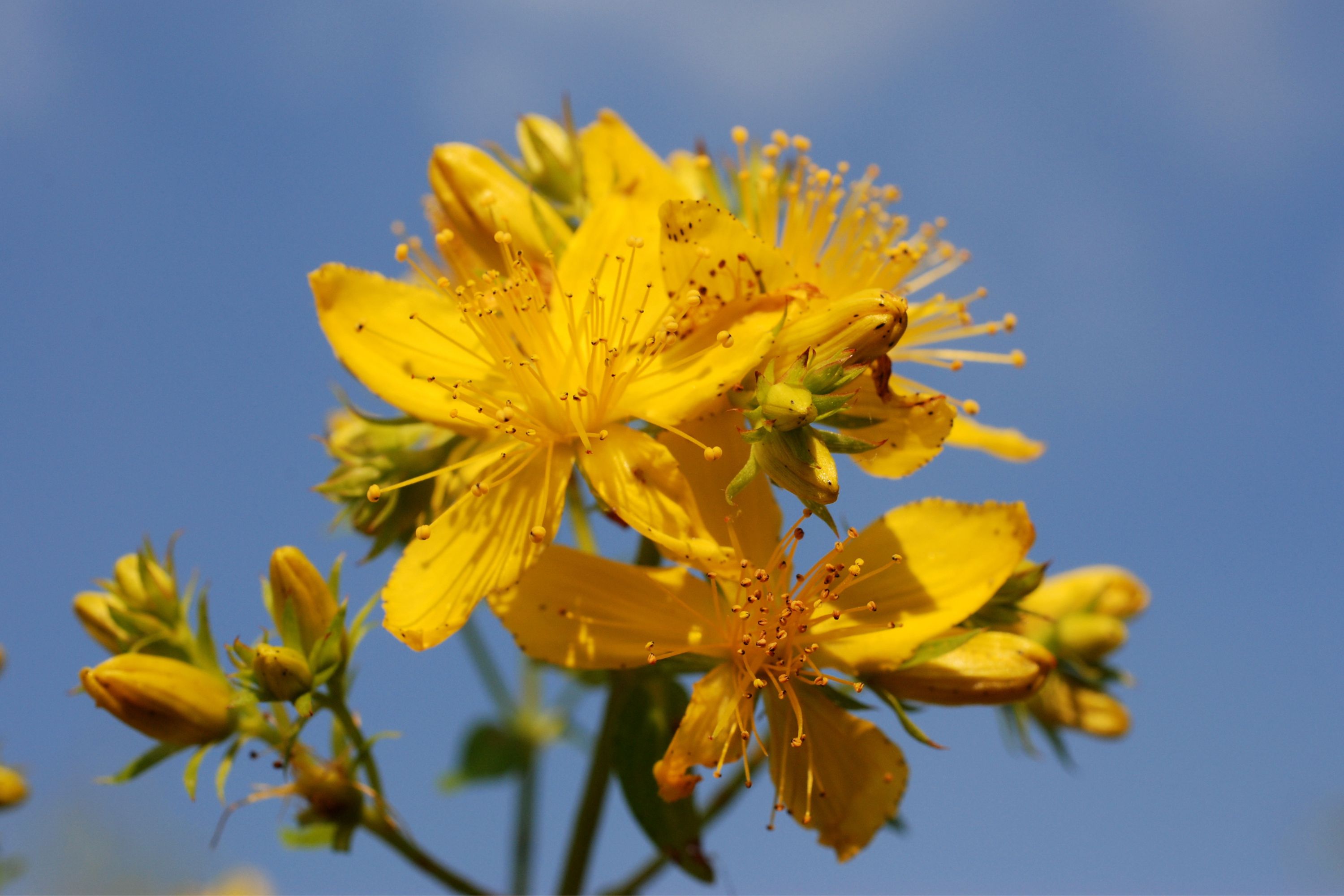
Hypericum perforatum, also known as St. John’s wort, is a herbaceous plant that belongs to the Hypericaceae family. It is native to Europe but can also be found in many other parts of the world, including Asia, North Africa, and North America. This plant has been used for its medicinal properties for centuries and is still popular today as an herbal remedy for a variety of conditions. In this article, we will explore the many uses and benefits of Hypericum perforatum. Taxonomy and Nomenclature: Hypericum perforatum is a flowering plant that belongs to the genus Hypericum, which comprises around 400 species. It is also commonly known as St. John’s wort or goatweed, and its botanical name is derived from the Greek words “hyper” (meaning above) and “eikon” (meaning picture) in reference to the plant’s traditional use of being hung over religious icons on St. John’s Day, which is June 24th. Description: Hypericum perforatum is a perennial plant that can grow up to one meter in height. It has a woody stem, branching at the top, and numerous small yellow flowers with five petals that bloom from June to September. The leaves are oblong and have translucent dots, which are the plant’s characteristic oil glands. The plant’s roots are shallow and fibrous, allowing it to grow in various soils, including rocky and sandy terrain. Distribution and Habitat: Hypericum perforatum is native to Europe but has been introduced to many parts of the world, including North America, South America, Australia, and Asia. It can be found in various habitats, including meadows, fields, pastures, and waste places, and is often considered a weed due to its ability to thrive in disturbed areas. Chemical Composition: The medicinal properties of Hypericum perforatum are primarily attributed to its chemical composition. The plant contains numerous compounds, including hypericin, hyperforin, flavonoids, and phenolic acids, which are responsible for its anti-inflammatory, antimicrobial, and antidepressant effects. Hypericin and hyperforin are two of the most important compounds found in the plant and are used in many of its medicinal preparations. Uses: Hypericum perforatum has been used for medicinal purposes for centuries, and its popularity as a natural remedy continues today. The plant has a wide range of therapeutic properties, including anti-inflammatory, antimicrobial, and antidepressant effects, and can be used to treat a variety of conditions. Depression: Hypericum perforatum is widely used as a natural remedy for depression, anxiety, and mood disorders. The plant’s antidepressant effects are primarily attributed to hyperforin, which has been shown to increase the levels of serotonin, dopamine, and norepinephrine in the brain. Several studies have demonstrated the plant’s effectiveness in treating mild to moderate depression, with some studies showing it to be as effective as prescription antidepressants. Anxiety and Stress: In addition to its antidepressant properties, Hypericum perforatum is also used to treat anxiety and stress. The plant’s ability to reduce anxiety is thought to be due to its effects on the neurotransmitters gamma-aminobutyric acid (GABA) and glutamate, which are involved in the regulation of anxiety and stress. Wound Healing: Hypericum perforatum has been used for centuries as a natural remedy for wound healing. The plant’s antimicrobial properties make it effective in treating minor skin injuries, including cuts, burns, and scrapes. The oil extracted from the plant’s flowers and leaves can be applied topically to promote healing and reduce inflammation. Anti-inflammatory: Hypericum perforatum has been shown to have significant anti-inflammatory effects, making it useful in the treatment of various inflammatory conditions, including arthritis
Taxonomic tree: