Bearded iris
(Iris germanica)
Description
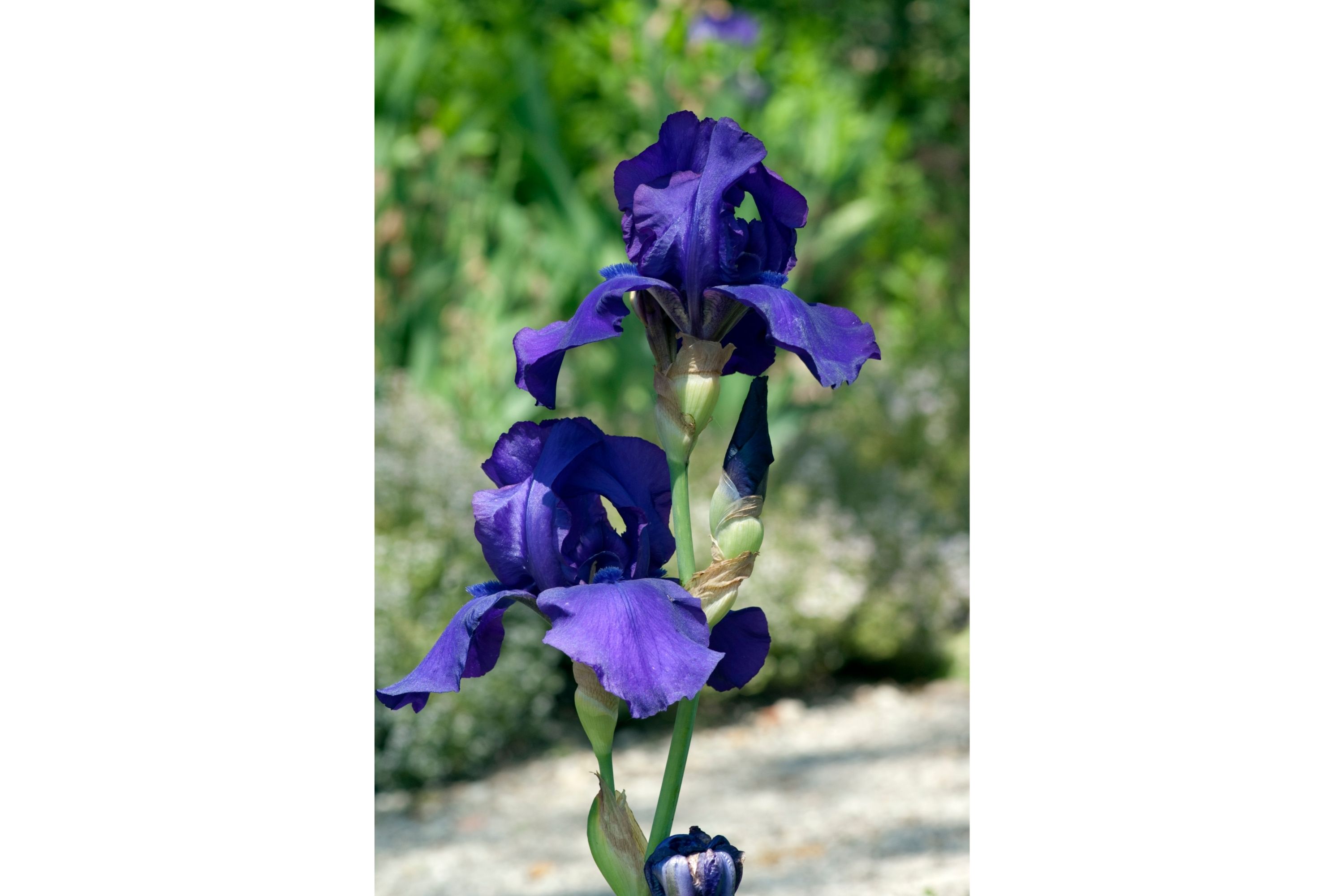
Iris germanica, also known as the German iris or bearded iris, is a species of flowering plant in the Iridaceae family. It is a herbaceous perennial that is native to the Mediterranean region and the Middle East. This plant is famous for its distinctive flowers and foliage, which have made it a favorite among gardeners and plant enthusiasts worldwide. In this article, we will explore the fascinating world of Iris germanica and learn about its characteristics, cultivation, propagation, and uses. Taxonomy: The scientific name of Iris germanica comes from the Greek word "Iris," which means "rainbow," and "germanica," which means "German." The name refers to the variety of colors and shades that the plant's flowers can display and its historical distribution in the central European region. The plant belongs to the Iridaceae family, which is a large family of plants that includes over 80 genera and 1,500 species. Within the genus Iris, there are around 300 species, and Iris germanica is one of the most popular and widely cultivated. Description: Iris germanica is a herbaceous perennial that can grow up to 1.5 meters (5 feet) in height. Its leaves are sword-shaped, with a blue-green or gray-green color, and they grow in a fan-like pattern from the base of the plant. The leaves can be up to 90 centimeters (35 inches) long and 2.5 centimeters (1 inch) wide. The plant produces long stems that emerge from the center of the fan of leaves, and at the top of these stems are the showy flowers. The flowers are large, with six petals that form a distinctive shape that is often described as resembling a butterfly or a bird in flight. The three petals on top are called standards, and the three petals below are called falls. The falls have a distinctive "beard" of hair-like filaments that are often a different color than the rest of the flower. The flowers can be a variety of colors, including blue, purple, yellow, orange, pink, and white. Cultivation: Iris germanica is a hardy plant that is relatively easy to grow and maintain. It prefers a sunny location and well-drained soil that is rich in organic matter. The plant can tolerate a wide range of soil types, from sandy to clay, but it prefers a soil pH of around 6.5. It is important to avoid planting the iris in areas that are prone to waterlogging or heavy rainfall, as this can cause root rot and other problems. Iris germanica is a popular garden plant and is often used in borders, beds, and rock gardens. It can also be grown in containers or as a cut flower. The plant is relatively low-maintenance and requires minimal watering once established. It is important to fertilize the plant regularly during the growing season to ensure healthy growth and flowering. Propagation: Iris germanica can be propagated by division, which is the process of separating the plant into smaller sections and replanting them. This is usually done in late summer or early fall, once the plant has finished flowering and the leaves have begun to die back. To propagate by division, carefully dig up the plant and separate the rhizomes (the fleshy, underground stems) into sections, each with its own set of leaves and roots. Replant the sections in well-drained soil, water thoroughly, and keep them moist until they become established. Iris germanica can also be propagated by seed, although this method is less common. To propagate by seed, collect the seeds from the plant once they have ripened in the fall. Plant the seeds in a container or seedbed, cover them lightly with soil.
Taxonomic tree: