Stachys inflata
(Stachys inflata)
Description
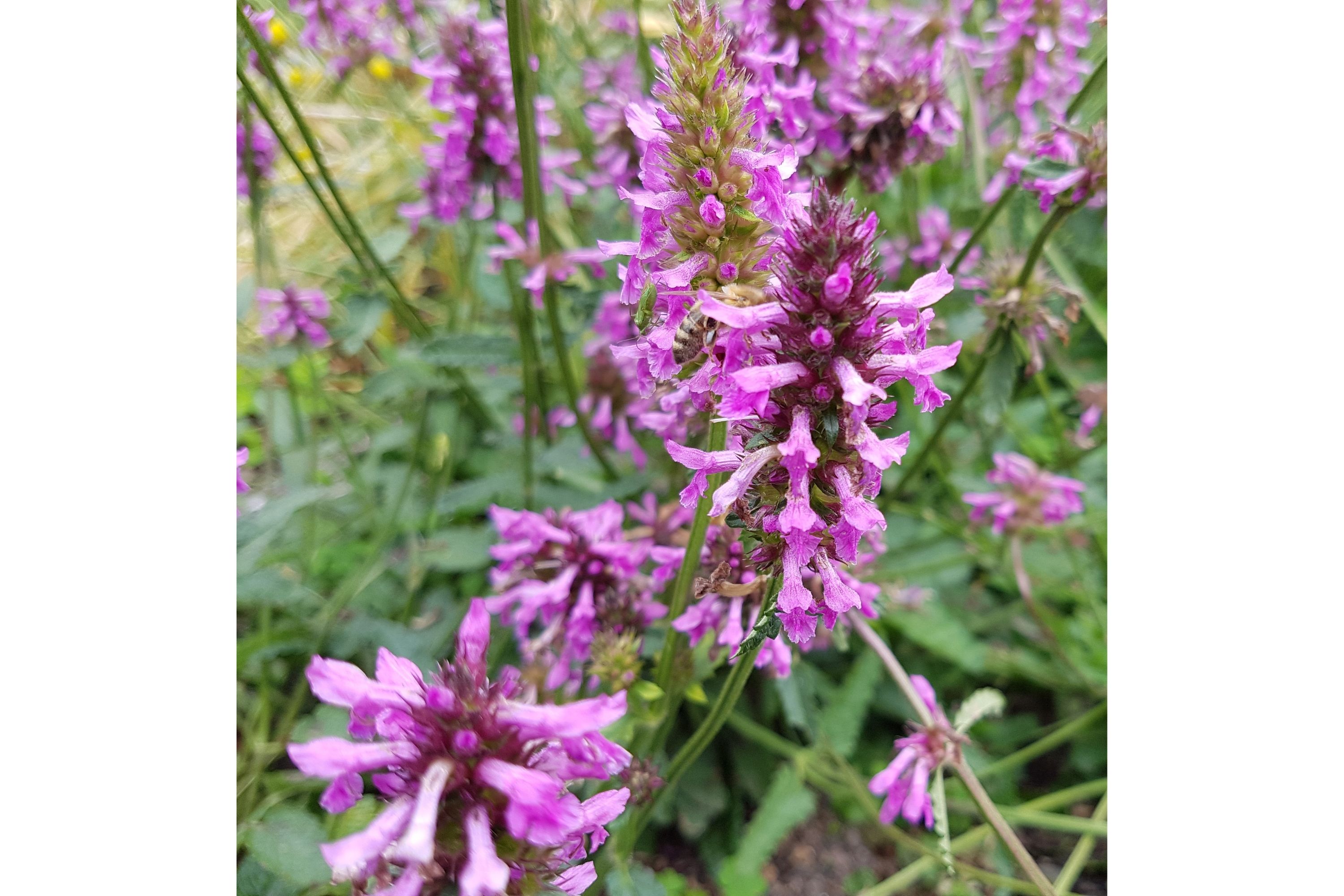
Stachys is one of the largest genera in the flowering plant family Lamiaceae. Estimates of the number of species in the genus vary from about 300, to about 450. The type species for the genus is Stachys sylvatica. Stachys is in the subfamily Lamioideae. Generic limits and relationships in this subfamily are poorly known. The distribution of the genus covers Europe, Asia, Africa, Australasia and North America. Common names include hedgenettle, heal-all, self-heal, woundwort, betony, and lamb's ears. Wood betony, S. officinalis, was the most important medicinal herb to the Anglo-Saxons of early medieval England. Stachys was named by Linnaeus in Species Plantarum in 1753. The name is derived from the Greek word σταχυς (stachys), meaning "an ear of grain", and refers to the fact that the inflorescence is often a spike. The name woundwort derives from the past use of certain species in herbal medicine for the treatment of wounds. Stachys is a genus of shrubs and annual or perennial herbs. The stems vary from 50–300 cm (20–120 in) tall, with simple, opposite, triangular leaves, 1–14 cm (0.4–5.5 in) long with serrate margins. In most species, the leaves are softly hairy. The flowers are 1 to 2 cm (0.4 to 0.8 in) long, clustered in the axils of the leaves on the upper part of the stem. The corolla is 5-lobed with the top lobe forming a 'hood', varying from white to pink, purple, red or pale yellow.
Taxonomic tree: