Delicate amitostigma
(Ponerorchis gracilis)
Description
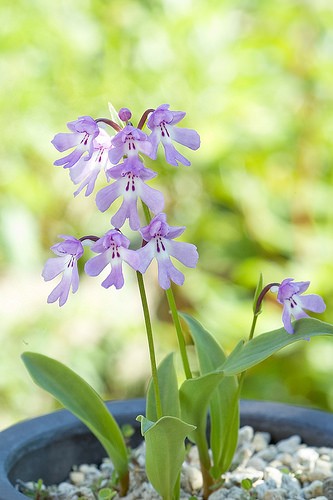
Ponerorchis gracilis (synonym Amitostigma gracile) is a species of plant in the family Orchidaceae. It is commonly known as delicate amitostigma. It is widespread across much of eastern Asia. It has been reported from Japan, Korea, Taiwan, and China (Anhui, Fujian, Guangxi, Guizhou, Hebei, Henan, Hubei, Hunan, Jiangsu, Liaoning, Shaanxi, Shandong, Sichuan, and Zhejiang). The species was first described by Carl Ludwig Blume in 1856, as Mitostigma gracile. It has been placed in various genera, including Gymnadenia, Orchis and Amitostigma.A molecular phylogenetic study in 2014, in which it was included as Amitostigma gracile, found that species of Amitostigma, Neottianthe and Ponerorchis were mixed together in a single clade, making none of the three genera monophyletic as then circumscribed. Amitostigma and Neottianthe were subsumed into Ponerorchis, with this species becoming Ponerorchis gracilis. Ponerorchis is a genus of Asian terrestrial tuberous orchids (family Orchidaceae). It is native to temperate Eurasia, from Poland to Japan, to the north of the Indian subcontinent and to northern Indochina. They can be found in evergreen forests and meadows in temperate, mountainous regions. The species Ponerorchis chidorii, endemic to Japan, is also known to grow epiphytically. In the horticultural trade, this genus is abbreviated as "Pnr". A wide range of mostly cultivars of Ponerorchis graminifolia are in cultivation, but are rarely grown outside Japan. Ponerorchis species grow from an ovoid tuber. They are slender plants with one to three usually slightly fleshy leaves. The flowers are all borne on the same side of the stem. The upper sepal and the two lateral petals form a hood. The column is short and has obvious side appendages. There is a rostellum separating the pollinia from the stigma. The genus was substantially expanded in 2014, so older descriptions do not necessarily apply to the revised genus. Ponerorchis was said to be differentiated from Amitostigma and Neottianthe by the presence of a bursicle or "sac" around the viscidium (a sticky pad at the base of the pollinium). However, this feature was found to be present in some species formerly assigned to Amitostigma and to be difficult to detect in some species of Ponerorchis. In the expanded genus, a bursicle is present is some species and not in others.
Taxonomic tree: