Silverleaf
(Pimelea sylvestris)
Description
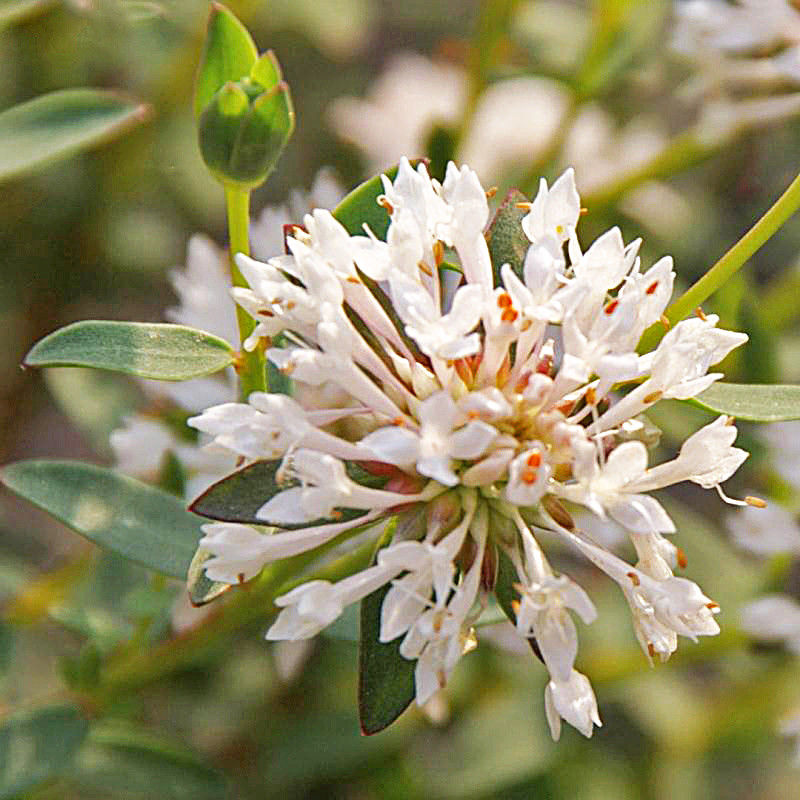
Pimelea sylvestris, commonly known as silverleaf or silver riceflower, is a fascinating and visually striking plant that belongs to the family Thymelaeaceae. Native to Australia, this perennial shrub has captivated botanists, gardeners, and nature enthusiasts with its delicate silver foliage and beautiful clusters of flowers. In this article, we will explore the various aspects of Pimelea sylvestris, including its taxonomy, morphology, distribution, habitat, cultivation, and conservation status. Taxonomy and Nomenclature Pimelea sylvestris was first formally described by botanist Robert Brown in 1810. The genus name "Pimelea" is derived from the Greek words "pimele," meaning "fat" or "grease," referring to the oily nature of the leaves in some species. The species epithet "sylvestris" is Latin for "of the woods," alluding to the plant's natural habitat. Morphology Pimelea sylvestris is a compact, evergreen shrub that typically grows up to 1 meter (3.3 feet) tall and wide. The most distinctive feature of this species is its attractive silver foliage. The leaves are linear to oblong in shape, covered with fine, dense hairs that give them a silvery appearance. The foliage adds an element of interest to any garden or landscape setting, providing contrast and texture. Flowers During the flowering season, Pimelea sylvestris showcases stunning clusters of small, bell-shaped flowers. The individual flowers have five petals and are typically white or pale pink, occasionally with a hint of purple or red. These clusters of flowers create a striking display against the silver foliage, making Pimelea sylvestris an excellent choice for ornamental purposes. Distribution and Habitat Pimelea sylvestris, commonly known as silverleaf or silver riceflower, is native to Australia. It has a relatively wide distribution across various regions of the country. While its primary occurrence is in southwestern Western Australia, it can also be found in other states such as South Australia and Victoria. In terms of habitat, Pimelea sylvestris is typically found in open woodlands, heathlands, and coastal areas. It thrives in habitats with well-draining soils, often sandy or loamy in nature. These plants are adapted to withstand the dry and harsh conditions of the Australian climate. The species can be encountered in areas characterized by a Mediterranean climate, which is typically defined by mild, wet winters and warm, dry summers. Pimelea sylvestris prefers regions with moderate temperatures and is not frost-tolerant. It is well-suited to coastal regions and can tolerate the salt spray and winds associated with coastal environments. It's important to note that the distribution and habitat preferences of Pimelea sylvestris can vary within its range, as different populations adapt to specific local conditions. Understanding the plant's natural habitat and range is crucial for its successful cultivation and conservation efforts. Cultivation Due to its stunning foliage and charming flowers, Pimelea sylvestris has become increasingly popular among gardeners and horticulturists. It is relatively easy to cultivate, making it suitable for both home gardens and larger-scale landscaping projects. Here are some key considerations for successfully growing Pimelea sylvestris: Climate: This plant thrives in a Mediterranean climate, characterized by mild, wet winters and warm, dry summers. It prefers regions with moderate temperatures and is not frost-tolerant. Sunlight: Pimelea sylvestris prefers a position in full sun or partial shade. It will tolerate some shade, but flowering may be reduced in shadier conditions. Soil: Well-draining soils are essential for the successful cultivation of Pimelea sylvestris. Sandy or loamy soils with good organic content are ideal. Avoid waterlogged or heavy clay soils. Watering: While Pimelea sylvestris is drought-tolerant once established, regular watering during dry spells will promote healthier growth and better flowering. Pruning: Pruning is generally not required for Pimelea sylvestris, but light trimming after flowering can help maintain a compact shape and encourage better branching. Conservation Status Pimelea sylvestris, like many native Australian plants, faces some conservation challenges. It is listed as a vulnerable species in the wild, primarily due to habitat loss and degradation caused by urbanization, agriculture, and invasive species. The clearing of native vegetation and the fragmentation of its natural habitat have resulted in a decline in the population of Pimelea sylvestris. Conservation efforts are crucial to ensure the long-term survival of this species. Several measures can be taken to protect and preserve Pimelea sylvestris: Habitat Restoration: Efforts should be made to restore and conserve the natural habitats where Pimelea sylvestris occurs. This includes protecting remaining areas of native vegetation and implementing habitat restoration projects to create suitable conditions for the plant to thrive. Ex Situ Conservation: Establishing ex situ conservation measures, such as seed banks and botanical gardens, can help safeguard the genetic diversity of Pimelea sylvestris. These initiatives can act as a safety net in case of further declines in the wild population. Invasive Species Management: Invasive plants and weeds pose a significant threat to the survival of Pimelea sylvestris. Implementing effective invasive species management strategies, such as regular monitoring and removal of invasive plants, can help reduce competition and allow Pimelea sylvestris to flourish. Public Awareness and Education: Raising awareness about the importance of native plant conservation and the ecological value of Pimelea sylvestris is crucial. Educating the public, landowners, and policymakers about the significance of protecting and preserving native plant species can garner support for conservation efforts. Collaboration and Research: Collaboration between government agencies, conservation organizations, researchers, and local communities is essential to develop comprehensive conservation plans for Pimelea sylvestris. Research on its ecology, population dynamics, and habitat requirements can provide valuable insights for conservation strategies. Conclusion Pimelea sylvestris, also known as silverleaf or silver riceflower, is an enchanting Australian shrub with striking silver foliage and beautiful clusters of flowers. Its unique appearance and adaptability make it a sought-after plant for gardens and landscapes. However, the species faces conservation challenges due to habitat loss and degradation. Efforts to protect and conserve Pimelea sylvestris are crucial to ensure its survival in the wild. Through habitat restoration, invasive species management, public awareness, and research collaborations, we can work towards safeguarding this species and preserving its ecological value. By appreciating and protecting plants like Pimelea sylvestris, we contribute to the preservation of biodiversity and the beauty of our natural world.
Taxonomic tree: